
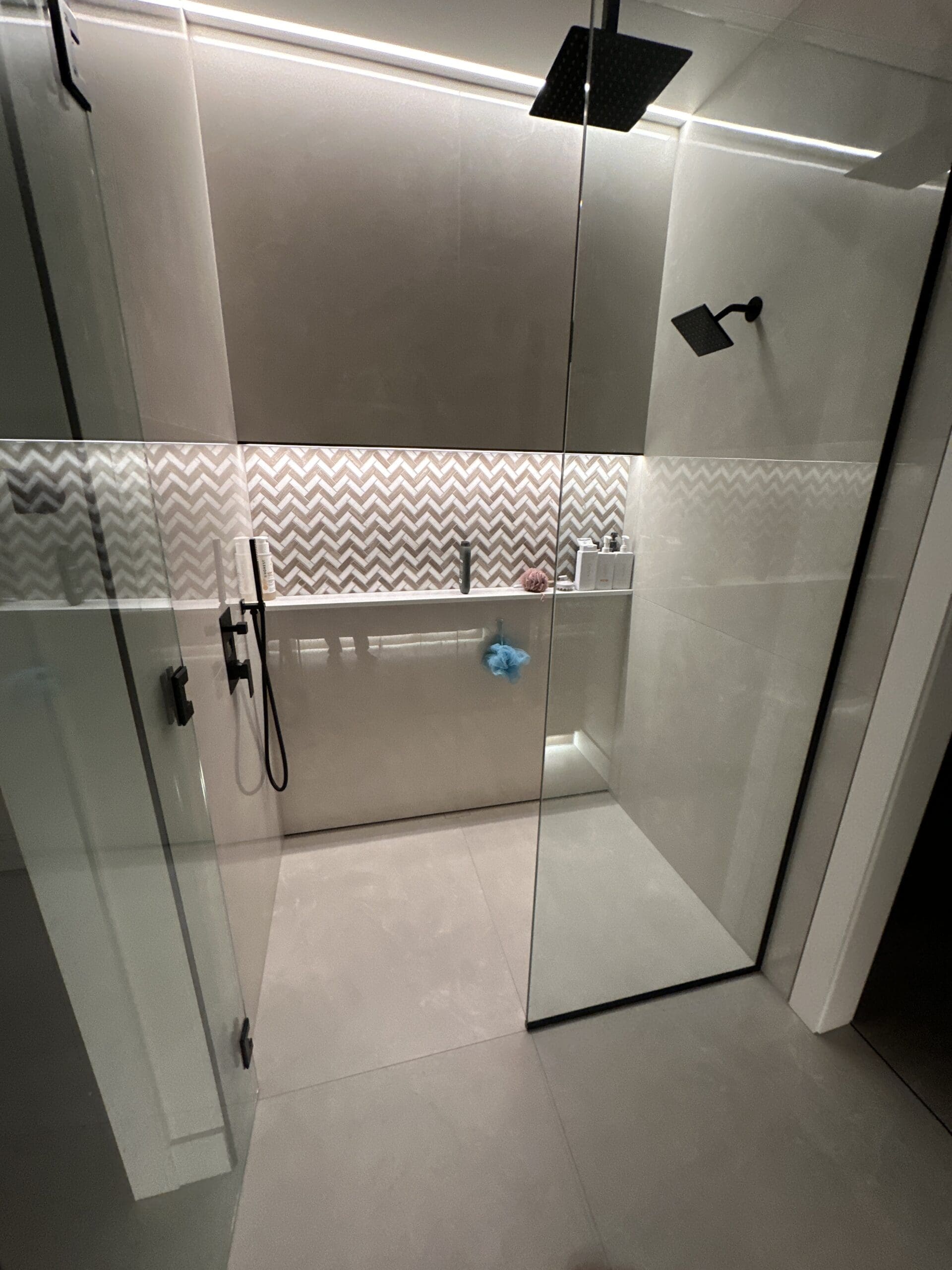
Nobody asks what a tile shower costs because they are curious. They ask because they have two quotes that are $4,000 apart and no way to tell which one is honest. This is the breakdown we give people in their bathroom, written down.
The short answer
These are the ranges we quote in the Spokane area for a full tear-out and rebuild — old surround out, new waterproofing, new tile, ready to use. They assume standard ceiling height and no structural surprises.
| Shower | Typical size | Installed range |
|---|---|---|
| Tub surround, tiled to ceiling | 5′ tub, three walls | $3,200 – $6,000 |
| Standard walk-in shower | 3′ × 5′ | $4,500 – $9,000 |
| Large walk-in with bench and niche | 4′ × 6′ | $7,500 – $14,000 |
| Curbless / zero-entry wet room | varies | $11,000 – $20,000+ |
If a quote lands well under the bottom of these ranges, something is being left out. Most often it is the waterproofing, and that is the one line you cannot see once the tile is on.
What you are actually paying for
Tile is usually 10 to 20 percent of a shower quote. The rest is labor and the layers nobody ever sees:
- Demolition and disposal. Getting the old surround out, hauling it, and finding out what is behind it. Half a day to a full day.
- Framing and blocking. Walls in older Spokane homes are rarely plumb. A bench, a grab bar or a heavy niche needs blocking added before anything else happens.
- The pan. Either a pre-sloped foam pan or a mud bed floated by hand. This is what makes water go to the drain instead of sitting in a corner.
- Waterproofing. A bonded sheet membrane or a rolled liquid membrane over the whole wet area, with every corner, seam and pipe penetration sealed. Then a flood test before a single tile goes up.
- Setting and grouting. The visible work, and the slowest part on anything but a plain 4×4 layout.
- Glass, fixtures and trim. Frameless glass alone is commonly $1,200 to $2,500 for a standard opening.
That waterproofing line is the difference between a shower that lasts 25 years and one that rots the subfloor in six. It is also invisible in a finished photo, which is exactly why it is the first thing a cheap bid quietly removes.
The four decisions that move the price most
1. Tile size and material
Counter-intuitively, small tile and very large tile both cost more to install than mid-size tile. A 2″ hex mosaic is many more linear feet of grout and a lot more cutting. A 24″ × 48″ porcelain panel needs two people, a leveling system and a perfectly flat wall — and the wall usually is not flat until we make it flat.
Natural stone adds again: marble and travertine are softer, chip more easily, and need sealing. A 12″ × 24″ porcelain in a straight or offset layout is the value sweet spot, and it is what most of the showers in our gallery are built from.
2. Pattern and layout
Herringbone, chevron and any 45-degree layout add cutting time and waste — budget 15 to 20 percent more tile and expect a day or more of extra labor. A feature wall in a different tile means two layouts have to meet cleanly at a corner, which is skill, not material.
3. Niches, benches, and the curb
A single recessed niche is typically $250 to $600 depending on size and whether the tile has to be mitered at the returns. A built-in bench is $500 to $1,200 — it has to be framed, sloped, waterproofed and tiled as its own small shower.
Going curbless is the big one. The floor structure has to drop so the shower floor sits flush with the bathroom floor, which usually means cutting and sistering joists. On a slab it is harder still. It is the right call for aging in place and it looks superb, but it is a structural change, not a finish change, and the price reflects that.
4. Glass
A framed sliding door on a tub is a few hundred dollars. A frameless 3/8″ panel with a header-free hinge is ten times that. Glass is measured after the tile is set, so it is ordered late and it is the item most likely to hold up a finish date.
What a cheap quote is usually leaving out
When we get called to fix somebody else’s shower, it is almost always one of these five:
- Tile set straight onto green board or drywall. Water-resistant is not waterproof. This fails, and it fails behind the tile where you cannot see it until the paint outside the wall starts to bubble.
- No pre-slope under the pan liner. Water reaches the liner, has nowhere to go, and sits there. That is what a shower that smells musty is actually telling you.
- Unsealed corners and penetrations. The membrane is only as good as the joint at the mixing valve.
- No flood test. Twenty-four hours of standing water before tiling is the only proof the pan holds. It costs a day and it is not optional.
- Caulk where movement happens, replaced with grout. Every change of plane — corners, floor-to-wall — moves seasonally. Grout there cracks within a year.
Ask any bidder which membrane they use and whether the price includes a flood test. The answer tells you most of what you need to know about the rest of the quote.
How long it takes
A straightforward walk-in shower is 5 to 9 working days, and that bathroom is out of service for most of them. Roughly: a day of demo, a day of framing and prep, a day for the pan, a day for waterproofing plus the flood test overnight, two to three days of setting and grouting, then a cure period before the glass template is taken. Glass then comes back 1 to 2 weeks later.
Anyone promising a finished tile shower in three days is skipping a cure or skipping the flood test. Those are the two waits that cannot be compressed.
Two things that are specific to Spokane
Hard water. Spokane water leaves mineral deposits on glass and on polished stone. It is a maintenance question, not an install question, but it should influence what you pick: a light, matte or textured porcelain hides scale far better than dark polished tile or a high-gloss marble, and it is the single most common regret we hear a year after a job.
Older housing stock. A lot of homes in the South Hill, Browne’s Addition and the older parts of the Valley have plank subfloors, out-of-plumb studs and cast iron waste lines. None of that is a problem, but it is real time, and it is why a walk-through beats a phone estimate every single time.
Getting a number you can actually plan around
The ranges above are for planning. The number for your bathroom depends on what is behind the wall, and the only way to know that is to look. We measure, tell you what we find, and give you a written scope that names the membrane, the pan, the tile and the glass, so you can put it side by side with anyone else’s bid and compare like for like.
See what we build on the custom showers page, or read up on a full bathroom remodel if the shower is one part of a bigger plan.
