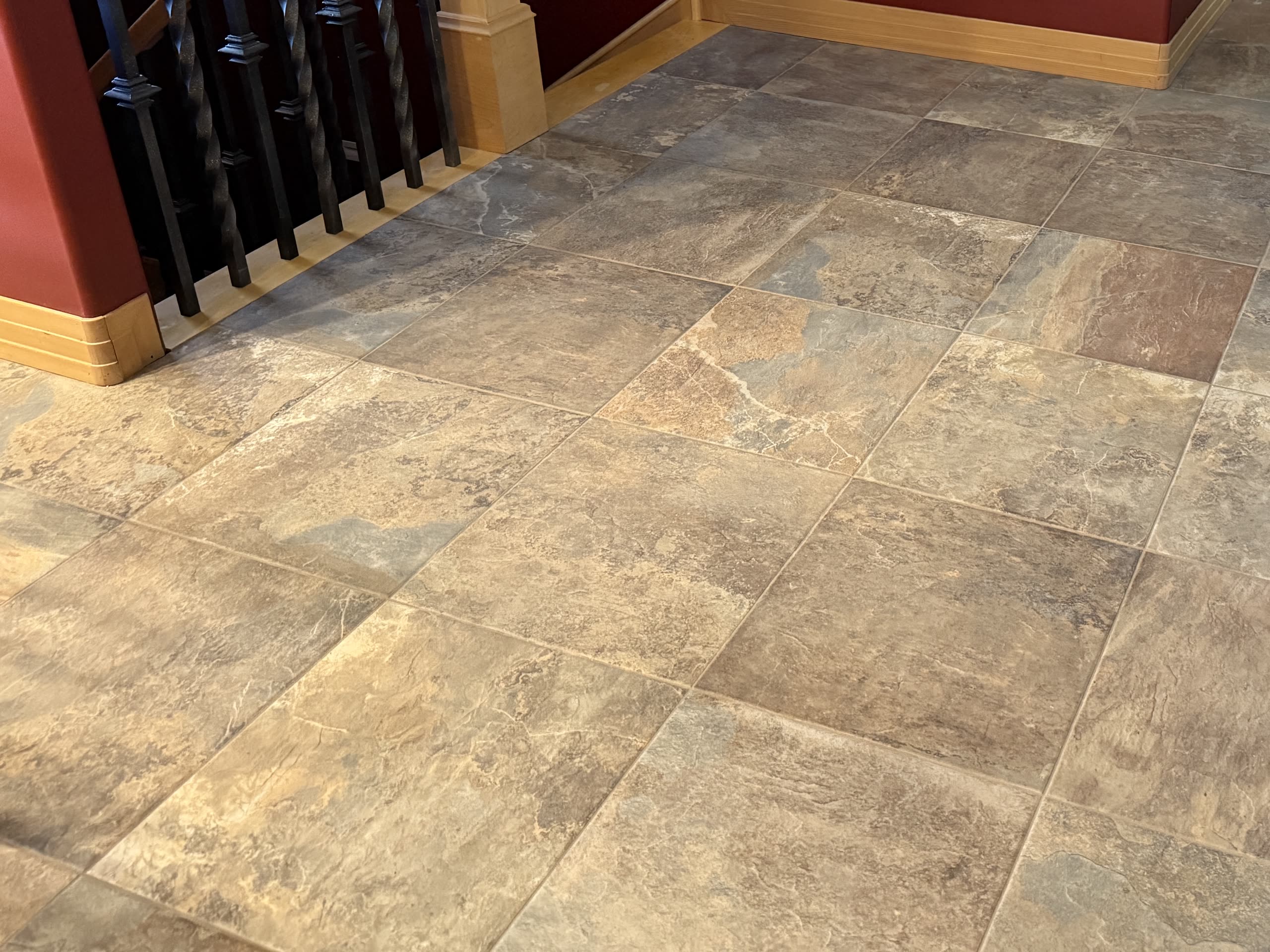
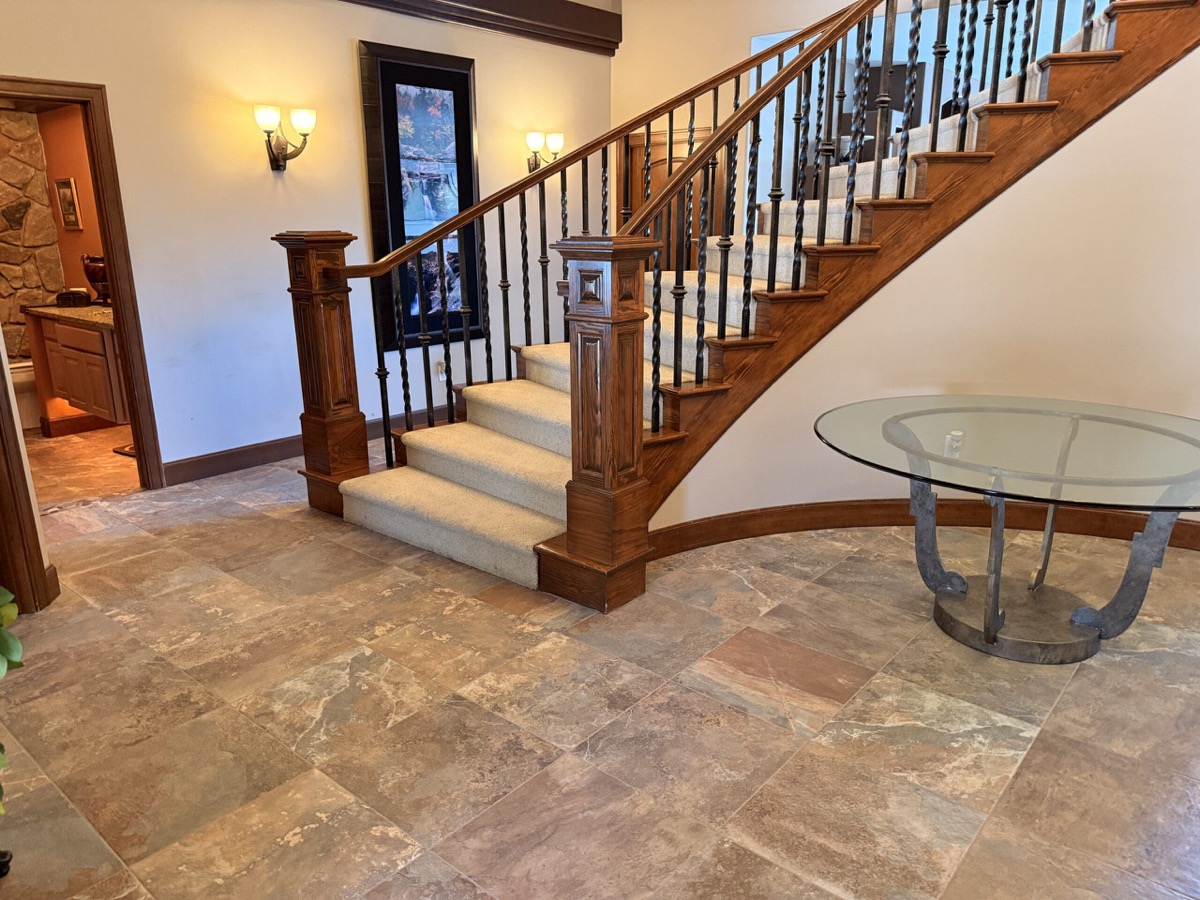
A tile floor almost never cracks because the tile was bad. It cracks because of what is under it or around it: a floor that was not flat or solid, tile that had nowhere to expand, or a floor that moved after it was laid.
Cracked tile is one of the most common complaints we hear about floors. The good news is that the causes are few, and most of them are decided before the first tile is set. Here is what to look for.
Why is my tile floor cracking?
These are the usual reasons, roughly in the order we see them.
- The floor under it was not ready. Tile is hard and does not bend. If the subfloor flexes, or the surface was not flat, solid and clean when the tile went down, the tile is the first thing to show it.
- There was nowhere for it to move. Tile expands and contracts with temperature. A floor run wall to wall with no movement joints has nowhere to go, so over time it can crack or tent (lift into a peak).
- Something moved underneath. If the floor structure shifts or settles, a rigid tile floor will usually crack along the line of the movement.
- Setting problems. Gaps under the tile, or tile bedded on mortar that did not fully support it, leave hollow spots that crack under weight.
- Impact. A dropped heavy object can crack a tile in an otherwise sound floor. That is one tile, not a pattern.
How can you tell which one it is?
Look at the pattern, not just the crack.
- One cracked tile in an otherwise tight floor points to impact or a hollow spot under that tile.
- Cracks running across several tiles in a line often follow a joint or edge in the floor below.
- Tiles lifting along a line, or a ridge in the floor, point to a floor with no room to expand.
- Cracks that appear together with sticking doors or cracks in the walls can mean the structure is moving. That is a question for someone qualified to look at the structure, not a tile repair.
We cannot judge the cause from a photo of the crack alone. We would rather look at the floor.
What stops tile floors from cracking?
It comes down to preparation, which is where most of the work in a good tile floor goes.
- A flat, solid floor. We flatten the floor before setting rather than trying to bury the problem in mortar. This also matters for large-format tile, which has far less tolerance for a floor that is not flat.
- Movement joints where they belong. We place them where the floor needs to move, including at doorways and around the perimeter, so the floor has somewhere to go instead of cracking.
- Checking what is under the tile. Tiling over an existing floor is sometimes fine and often a bad idea. It depends on what is down, how sound it is, and what the added height does to doors and transitions. We would rather tell you the old floor has to come up than set a new one over something that is going to move.
- Heat is planned in, not added later. If you want heated tile floors, that is decided before the tile goes down.
Can a cracked tile floor be repaired?
Sometimes a single damaged tile can be replaced. But if the crack has a cause, such as a moving subfloor or a floor with no movement joints, replacing the tile without fixing the cause usually means it cracks again. That is why the first question is always why it cracked.
Keep a few spare boxes of the tile you choose. Dye lots change, and a future repair with mismatched tile is very visible.
Planning a new floor or fixing an old one?
If you are planning a new floor, the questions that matter most are what is under it and how it will be allowed to move. If you have a floor that is already cracking, send us photos of the cracks and the room, and tell us what is under the floor if you know.
See our tile flooring installation in Spokane, read about tile installation in Spokane, or send us the room and a few photos. Call (509) 992-5381.