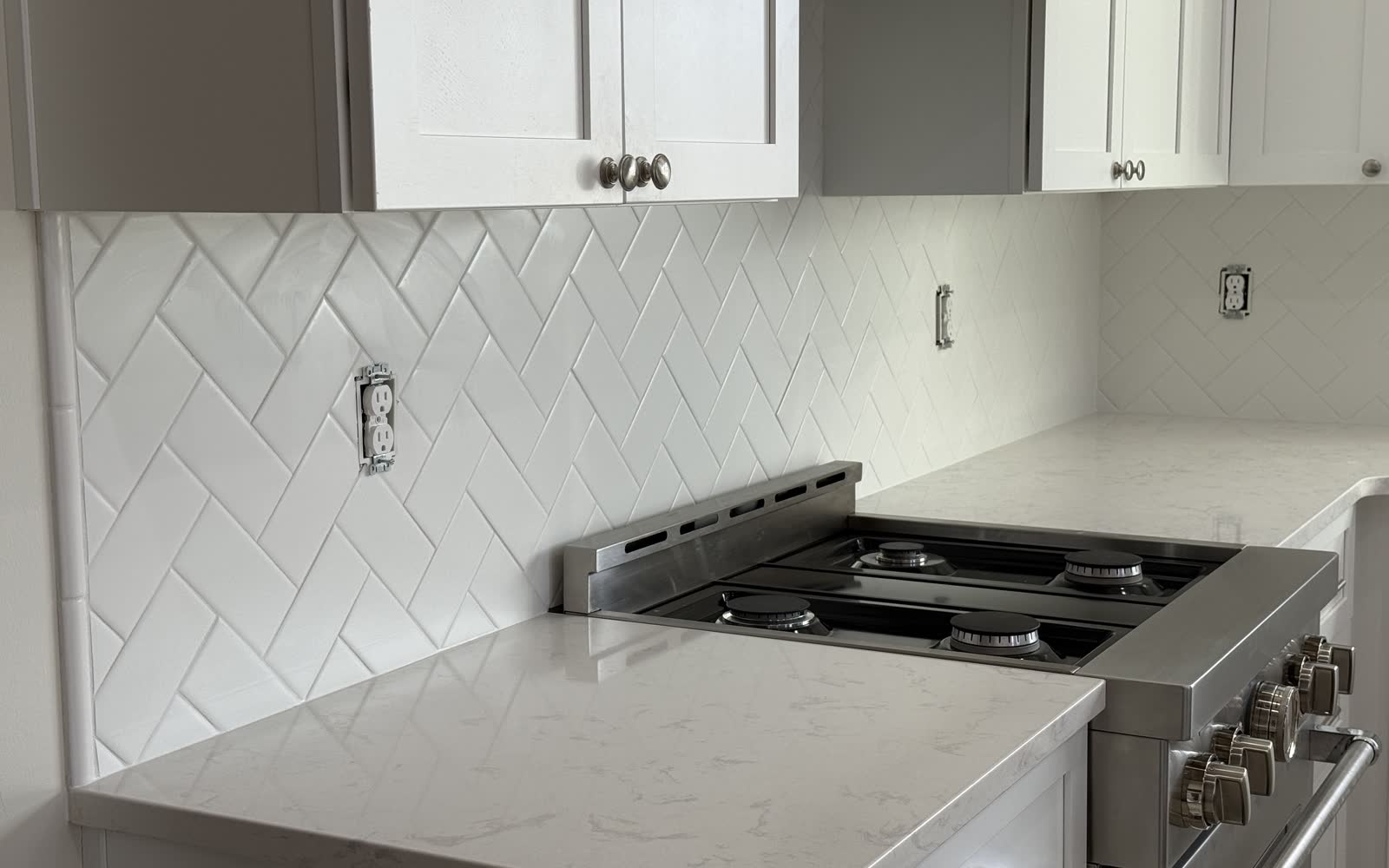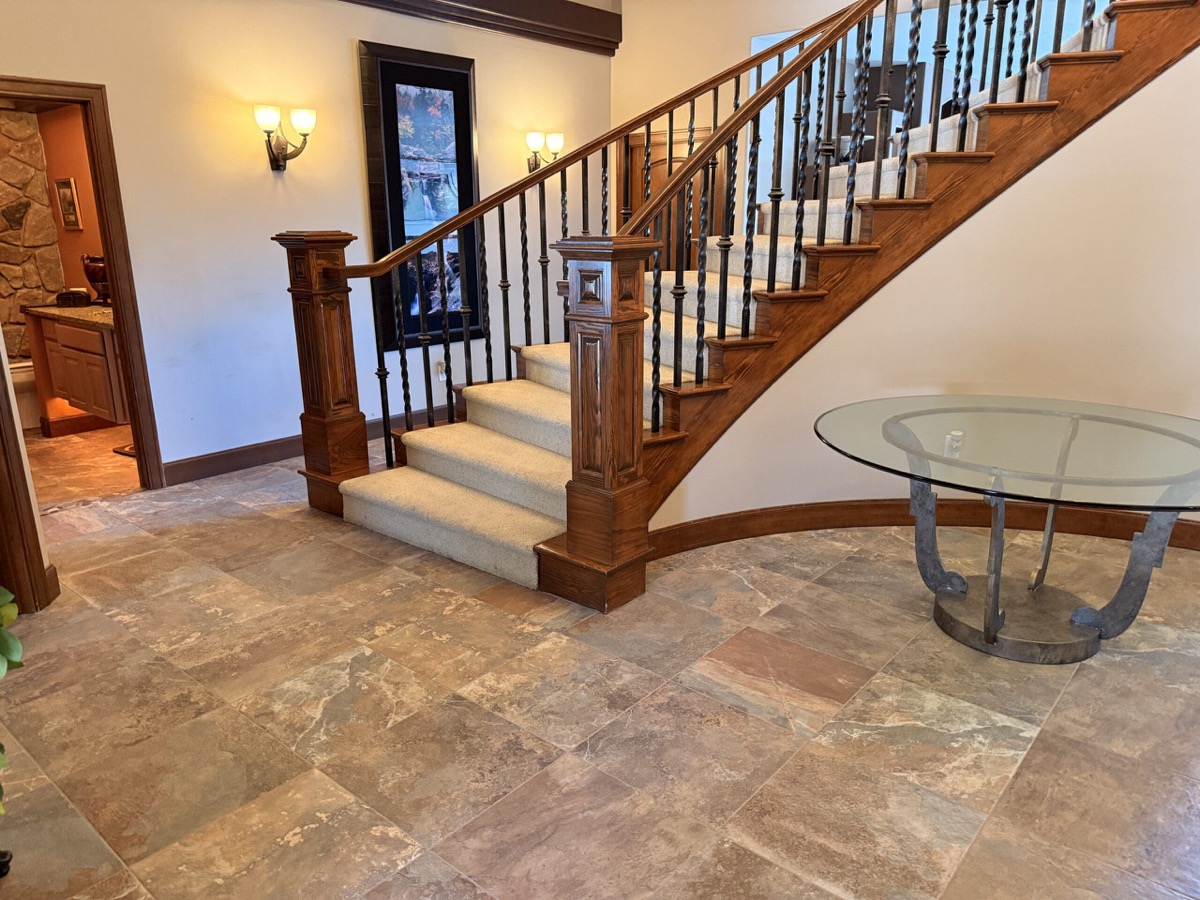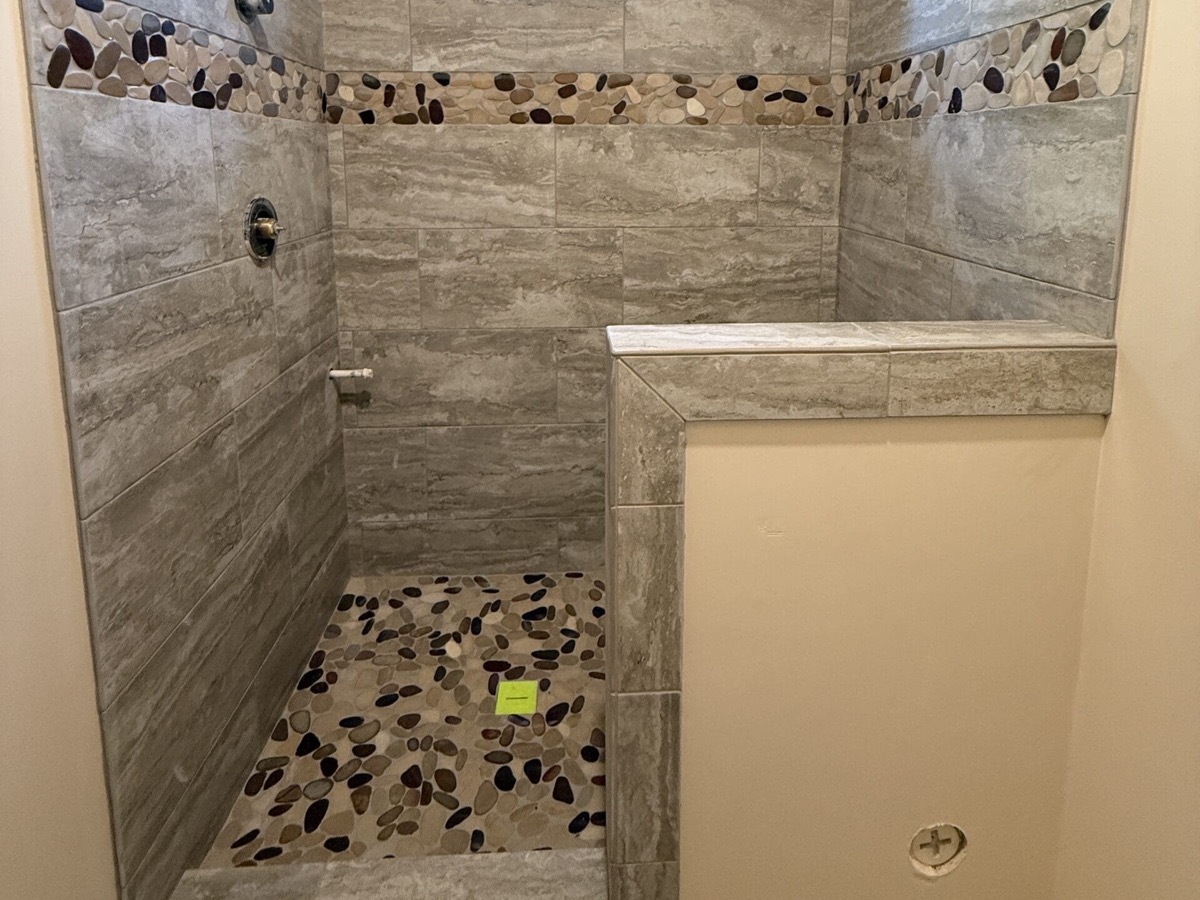
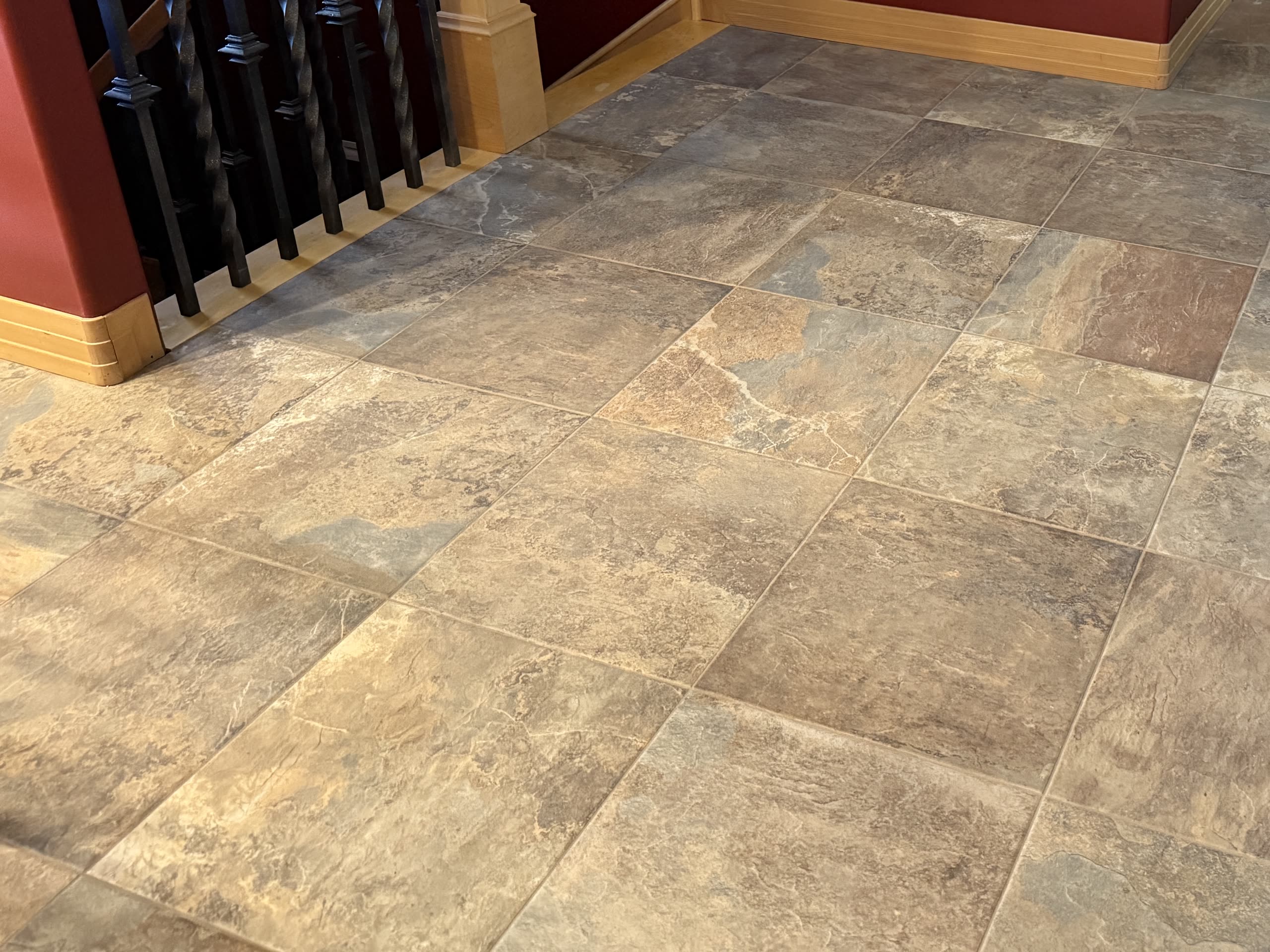
Large-format tile makes a wall or floor look clean and seamless, but it shows every dip underneath it. The surface has to be checked and prepared before the first tile is set, or you end up with raised edges you can see and feel.
If you are planning large tile for a bathroom, kitchen or entry, the tile choice is the easy part. What decides how it looks in the end is the surface behind it. Here is what to know before you commit.
What is lippage?
Lippage is when the edge of one tile sits higher than the edge of the tile next to it. You notice it as a ridge along the grout line. You can feel it with a bare foot or a hand, and on a floor it catches the light and your eye.
It comes from two places: a surface that is not flat, and tile that is not perfectly flat itself. Large pieces make both problems easier to see, because a long tile bridges any dip and one corner can end up higher than its neighbor.
How much lippage is acceptable?
Tile has a published limit. The ANSI A108 installation standard allows 1/32 inch of lippage where the grout joint is 1/16 inch up to under 1/4 inch wide, and 1/16 inch where the joint is 1/4 inch or wider. The National Tile Contractors Association describes 1/32 inch as roughly the thickness of a credit card, and 1/16 inch as roughly a penny.
That is very little. It means a tile floor is judged on small differences, and it is the reason the work done before setting matters so much. (Source: TileLetter, “Acceptable allowances for lippage”.)
Are large-format tiles difficult to install?
They are less forgiving than small tile. Small pieces follow a slightly uneven surface and hide it. Large pieces do not. The hard part is rarely the cutting or the setting itself. It is getting the wall or floor ready so the tile can sit evenly across it.
Before large tile goes down, a good installer will:
- Check the surface for high and low spots, not just look at it.
- Correct what needs correcting, rather than hoping the setting material will absorb it.
- Look at the tile itself, since some pieces have a slight bow.
- Plan the layout and how the tile will be set so the edges line up.
This takes time, and it is the part you do not see once the tile is in. It is also what separates a finished floor you stop noticing from one you keep looking at.
Is 24×24 tile considered large format?
There is no single rule. A common description is tile with at least one side 15 inches or longer, so a 24×24 piece usually counts. Long planks and big wall panels count too. If you are not sure whether your tile falls in this group, ask. The answer changes how the surface should be prepared.
What should you ask your tile installer?
You do not need technical language. Ask plain questions:
- How will you check that the wall or floor is flat before you start?
- What happens if you find low or high spots?
- How will you keep the tile edges level with each other?
- Will you look over the tile before it is set?
A clear, calm answer is a good sign. If the answer is “it will be fine,” keep asking.
No installer can promise a perfect result on every surface, and an older house may have walls and floors that need more work than you expect. What you can expect is that the checking happens before the tile is set, not after.
Planning large tile in Spokane?
For floors, see our tile flooring in Spokane page. For walls, showers and backsplashes, our tile installation in Spokane page covers the work from layout to the finished surface.
If you are choosing large tile and want the surface looked at first, tell us about your project or call (509) 992-5381.