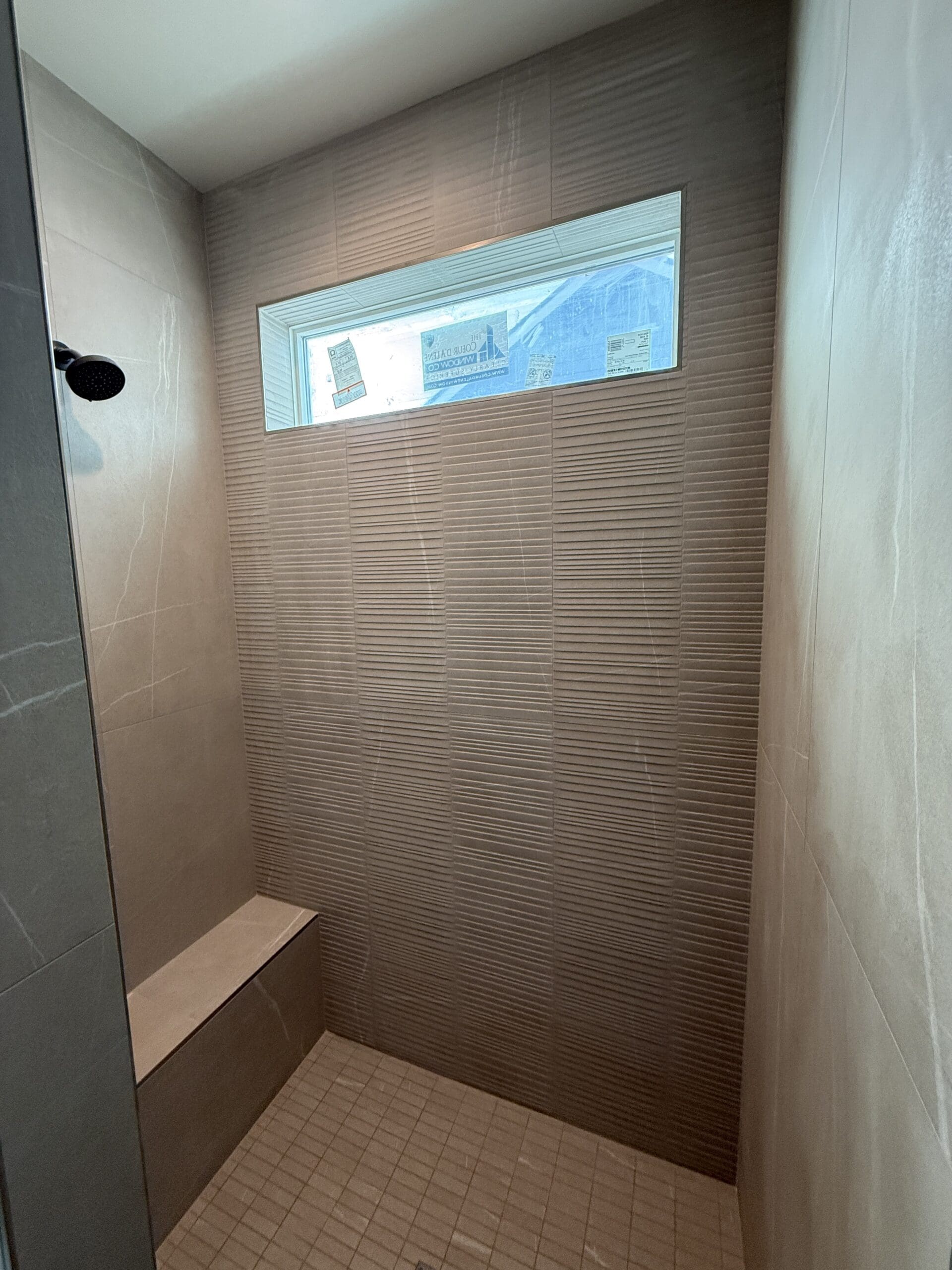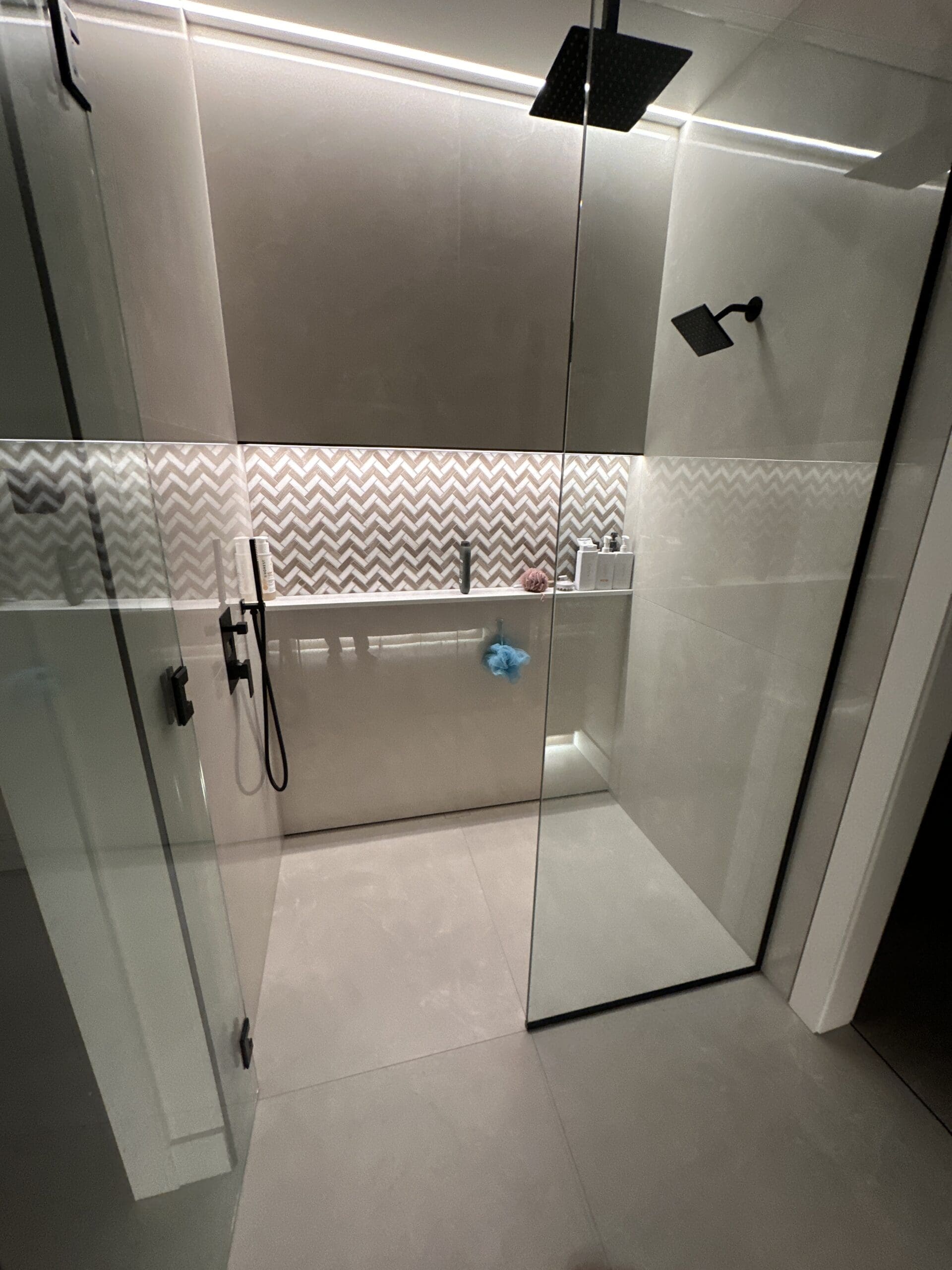
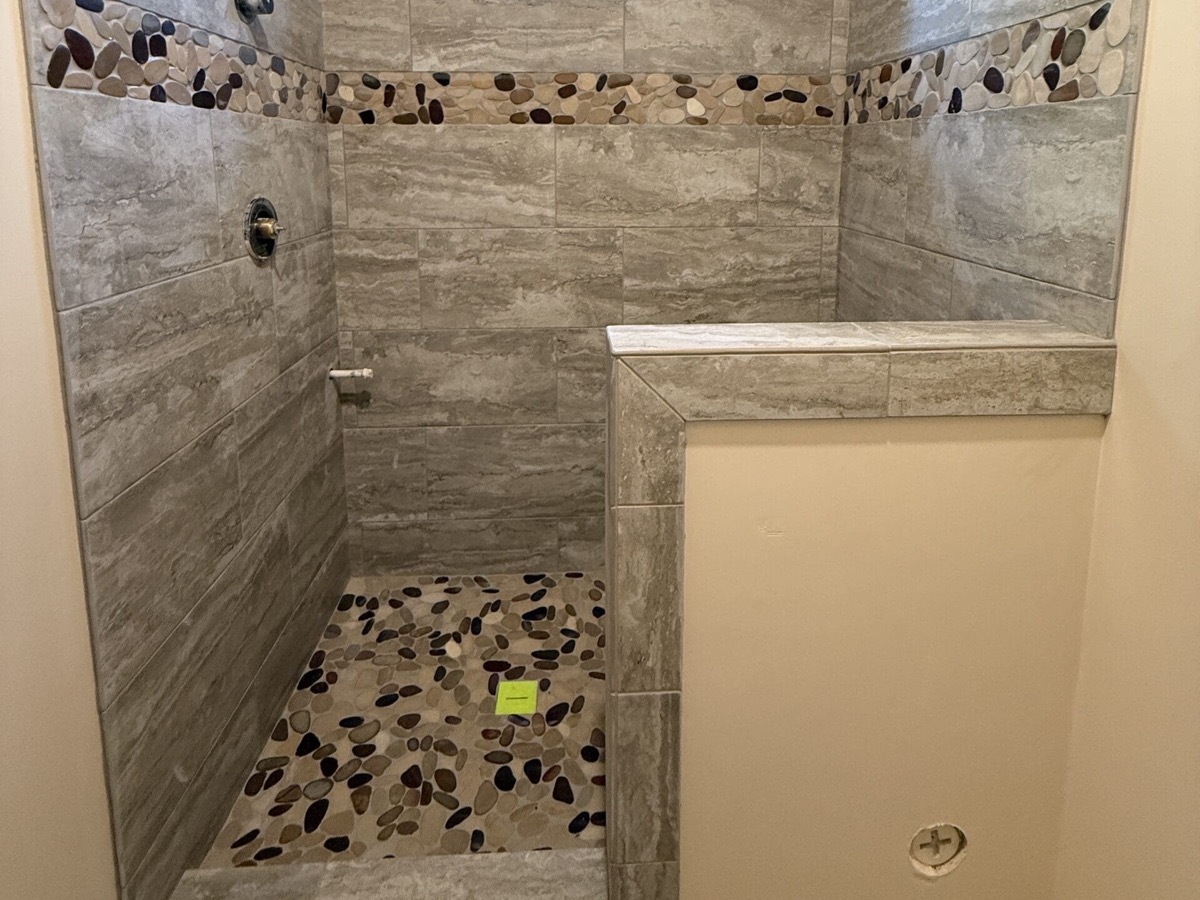
Water gets behind shower tile through small gaps in grout and caulk. A five-minute look at the corners, the floor edge and the drain can show a gap while it is still small.
Showers are used every day, and the joints between tiles are the first place wear shows up. Most of the time a hairline gap is nothing. Sometimes it is the start of water getting behind the wall, which is a bigger job to fix. Before the cold months, when the bathroom gets less airing, it is worth a look.
Where to look
Go slowly, with a flashlight if the light is poor.
- Inside corners. Where two walls meet, and where the wall meets the floor, there is usually caulk, not grout. Look for cracks, gaps or caulk that has pulled away.
- The floor edge. Check the line where the shower floor meets the wall tile. This joint moves the most.
- Around the drain. Look for loose or missing grout, or tile that sits at a different height than its neighbor.
- Grout lines. Press gently on any tile that looks off. Tile that moves or sounds hollow is not well bonded.
- Fixtures and niches. Check around the valve, the showerhead and any built-in niche.
What the signs can mean
Cracked grout on its own is common, and grout can be refreshed. Caulk that has split or lifted is easier to deal with, and it is meant to be replaced from time to time.
Other signs deserve more attention: tile that is loose, a soft spot in the wall, staining or a musty smell near the shower, or paint peeling on the other side of the wall. Those can mean water is getting somewhere it should not.
Do not try to judge it from a distance. If you are not sure what you are seeing, take clear photos and have a qualified person look.
Why the parts you cannot see matter
A tiled shower is only as good as what sits behind the tile. Most shower failures are not tile failures. They come from waterproofing, slope or movement problems that take a few years to show up. Grout and caulk are the visible edge of a system that is meant to stay dry behind them.
That is where we put our attention when we build a shower: a proper waterproofing system behind the tile, a slope that gets water to the drain, and movement joints where the assembly needs them.
Planning a new shower?
If your shower is past fixing, or you are planning a new one, tell us about the space and the tile you like. We build custom tile showers in Spokane, walk-in and curbless, with the waterproofing done behind the tile. You can also see our bathroom remodeling work.
Send us the details or call (509) 992-5381.